Introduction
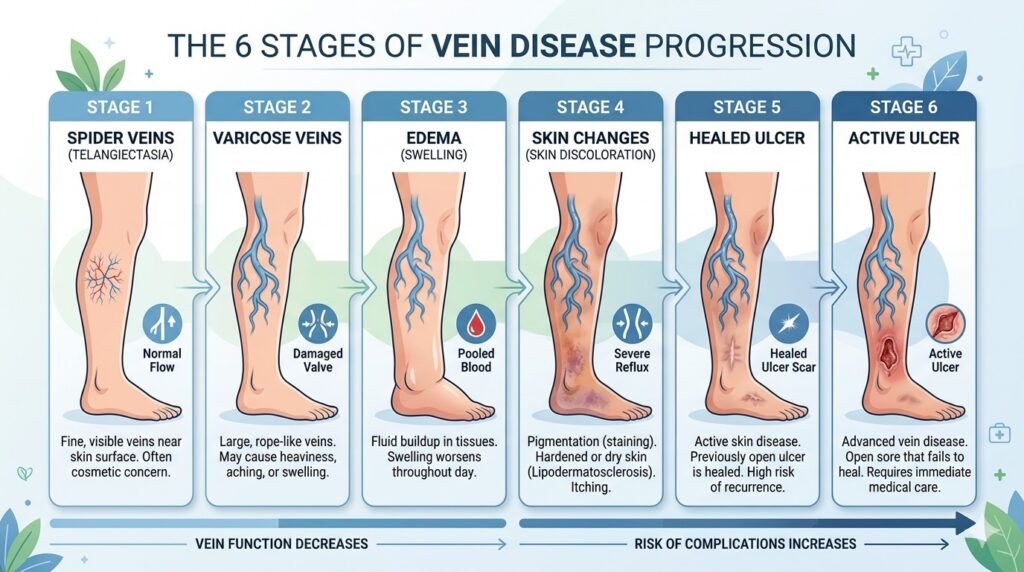
In the medical world, we don’t just look at a leg and say someone has “bad veins.” We use a standardized system called the CEAP Classification to determine the severity of Chronic Venous Insufficiency (CVI). Understanding these stages is vital for every U.S. patient, as it often dictates whether insurance will cover your treatment.
At VaricoseMD, we want to help you identify your stage before the condition progresses to a more serious level.
Stage 1: Spider Veins and Reticular Veins
This is the earliest stage. You may notice small, red, or purple “webs” on the surface. While largely cosmetic at this point, they can be an early warning sign that the deeper valves are under stress.
Stage 2: Bulging Varicose Veins
This is where most patients seek help. The veins are now larger than 3mm and appear “rope-like” or twisted. You likely feel aching or heaviness after a long day of standing.
Stage 3: Edema (Swelling)
At this stage, the backup of blood is so significant that fluid begins to leak into the surrounding tissue. You may find that your shoes feel tight by the evening or that your socks leave deep indentations in your skin.
Stage 4: Skin Changes (Lipodermatosclerosis)
This is a critical warning sign. The skin around the ankles may become dark, leathery, or reddish-brown. This happens because blood has been pooling so long that it is physically damaging the skin tissue from the inside out.
Stage 5 & 6: Venous Ulcers
Stage 5 represents a “healed” ulcer, while Stage 6 is an **active open sore**. These ulcers are difficult to heal and pose a significant risk for infection. Reaching this stage means the vascular system requires immediate, intensive intervention.
The Importance of Early Intervention
The goal of modern vein care is to treat patients at Stage 2 or 3. By closing the diseased veins early, we can prevent the permanent skin damage and painful ulcers associated with the later stages.
Conclusion
Vein disease is progressive—it does not get better on its own. By identifying your stage today, you can take control of your vascular health and avoid the complications of tomorrow.
Where do your legs fall on the scale? If you are experiencing swelling or skin changes, it’s time for a professional grade. Visit the VaricoseMD App to book a consultation with a vascular expert near you.